
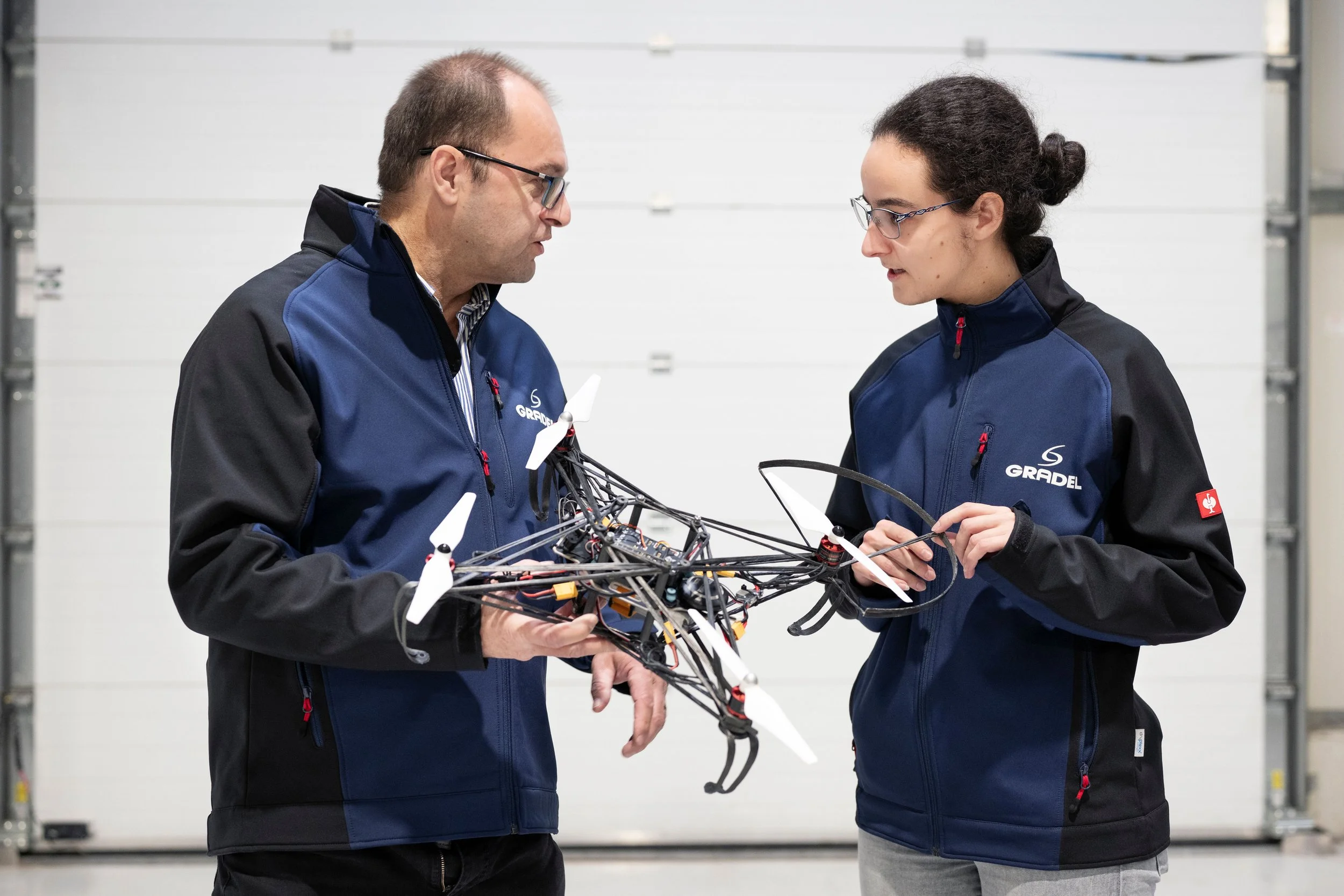
Ultra lightweight Carbon fiber drone
Driving the innovation and technology development in European’s defence mission.
Lightweight Drone AI

At GRADEL, we are relentlessly focused on developing a next-generation carbon fiber ultra-lightweight FPV drone that redefines performance, durability, and mission capability. From the earliest concept sketches to final production validation, our engineering team integrates advanced mechanical design principles with precision manufacturing to create a structure that is both exceptionally light and structurally resilient. Using state-of-the-art Finite Element Analysis (FEA), we simulate real-world aerodynamic loads, vibration profiles, and impact scenarios to optimize every gram of material without compromising strength. This allows us to refine stress distribution across the carbon fiber frame, eliminate unnecessary mass, and reinforce critical load paths, resulting in a drone platform that delivers superior agility, endurance, and reliability.
Our commitment to excellence extends beyond digital simulation. We conduct rigorous material testing and calibration procedures, including tensile strength validation, fatigue analysis, thermal stability testing, and vibration characterization to ensure consistent performance under demanding operational conditions. Each component undergoes careful evaluation to guarantee dimensional accuracy and structural integrity, meeting the stringent requirements expected in defense and security applications. By collaborating with European defense agencies, we contribute to the development of advanced aerial systems designed for surveillance, rapid deployment, and tactical support missions. At the same time, our work drives local technological advancement, strengthening the regional innovation ecosystem and fostering high-value engineering expertise. Through continuous research, precision engineering, and an unwavering dedication to innovation, we are not only building ultra-lightweight FPV drones — we are shaping the future of resilient, high-performance aerial platforms in Europe and beyond.
The collaboration with Data Design Engineering has already yielded a second breakthrough with strong commercial potential: an ultra-light autonomous drone able to navigate GPS and GNSS denied or remote control, using only an onboard optical sensor. GRADEL plans to produce the composite structures of these drones using GRAM technology from 2026, targeting defence applications where longer range, lower energy consumption and reduced detectability offer a decisive operational advantage.
As always, we are looking forward in supporting additional clients seeking reliable, proven, and high-performance solutions. Let’s build the future together.
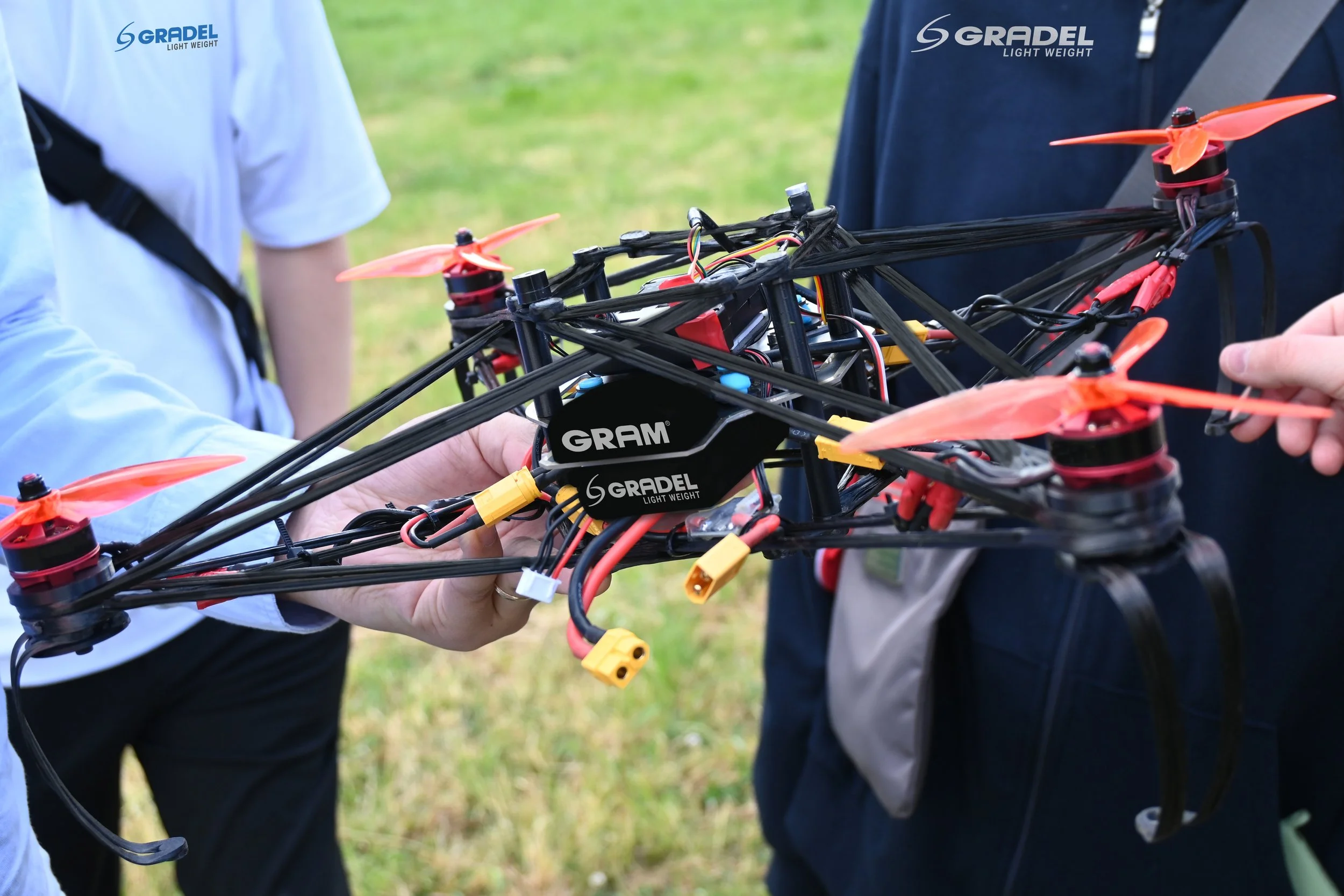
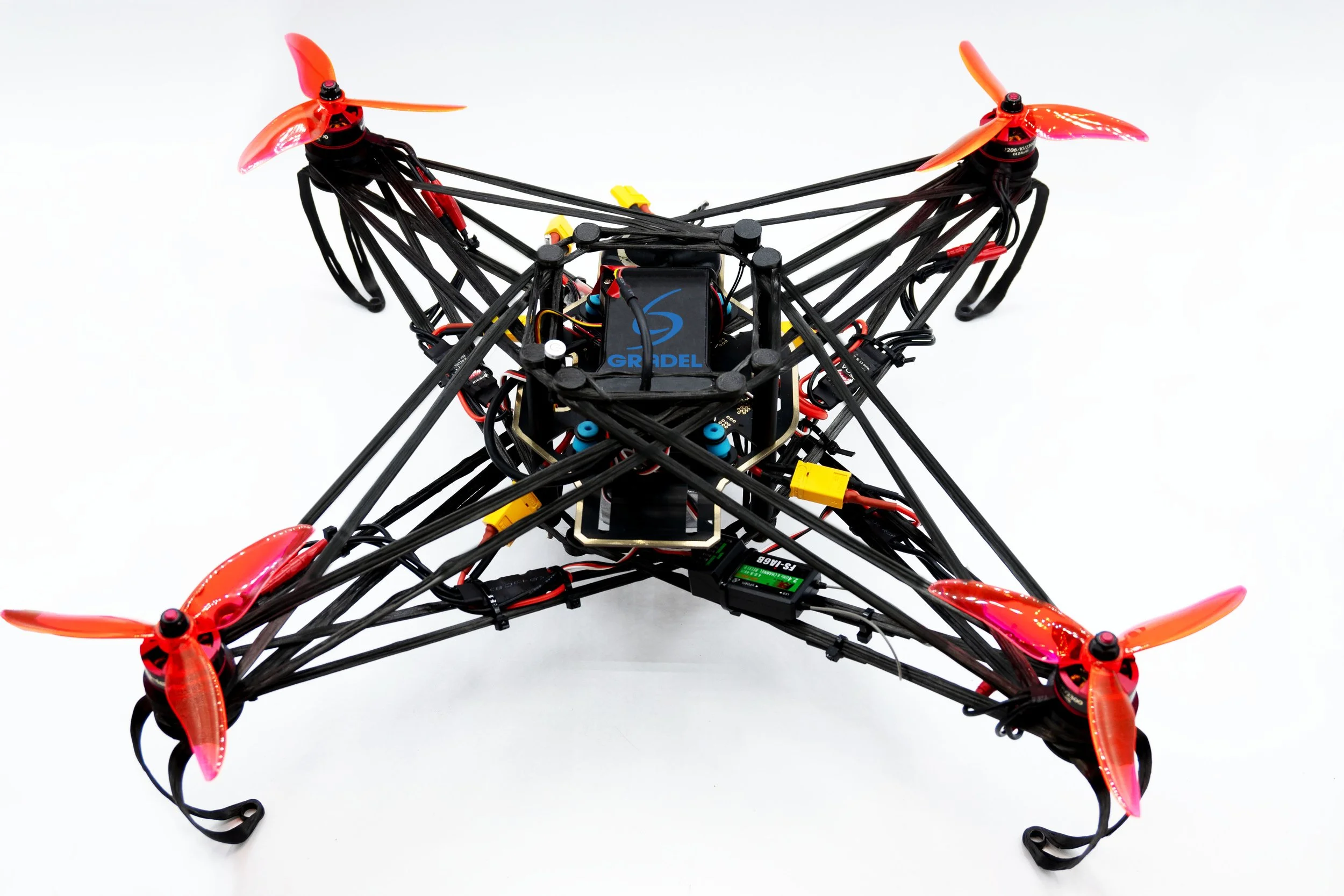
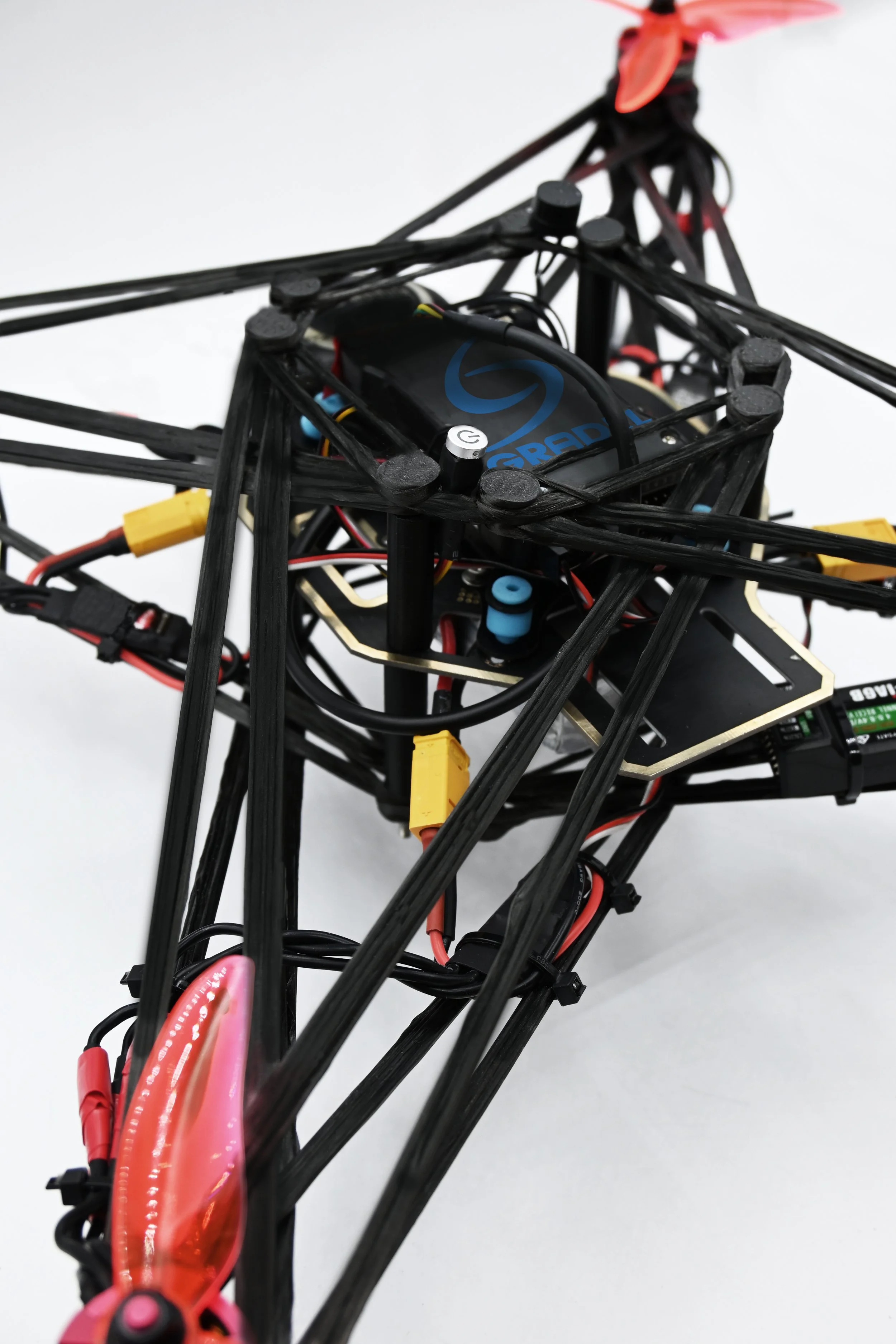
Building on the success of our prototype, we are now entering the next decisive phase: industrialization and scalable production. Our focus is on transforming this high-performance carbon fiber FPV platform from an advanced engineering demonstrator into a robust, repeatable, and production-ready system. This involves refining our manufacturing workflows, optimizing composite layup processes, implementing quality-controlled assembly lines, and ensuring strict traceability across every component. By standardizing calibration procedures and integrating automated inspection systems, we are preparing to deliver consistent performance at scale while maintaining the ultra-lightweight structural advantages achieved through our mechanical design and FEA-driven optimization.
Looking ahead, the integration of advanced AI processing capabilities will elevate the platform to an entirely new level. By incorporating a dedicated onboard AI chip, we are enabling real-time data processing, adaptive flight control, autonomous navigation support, and intelligent mission assistance directly at the edge. This will significantly enhance user interaction by streamlining the interface, reducing cognitive load on operators, and enabling semi-autonomous or fully assisted mission profiles. Tasks that previously required multiple operators—such as live target tracking, obstacle avoidance, signal optimization, and situational analysis—can be consolidated into a more efficient and intuitive operational workflow.
The result is not only improved performance and faster decision-making, but also reduced manpower requirements and enhanced operational safety. By merging lightweight mechanical innovation with embedded artificial intelligence, we are shaping a next-generation aerial system that bridges advanced hardware engineering with intelligent software ecosystems. As we move toward production, our ambition remains clear: to deliver a scalable, AI-enabled defense and security solution that strengthens European technological sovereignty while continuing to push the boundaries of local innovation and aerospace development.
Live demonstration of a worlds first offline GPS and GNSS denied operating drone , pairing with two other edge devices. The drone is made out of GRAM structures with Basalt fiber material.