
ExoMars Mission
Disclaimer: The content on this page is provided for educational and editorial purposes only..
The ExoMars programme is a joint initiative between the European Space Agency and Roscosmos dedicated to investigating the past and present potential for life on Mars. Designed to explore the Martian surface and subsurface with advanced scientific instruments, ExoMars seeks to analyze atmospheric trace gases, study the planet’s geology, and search for biosignatures preserved beneath the surface. By combining orbital observations with rover-based exploration, the mission aims to deepen our understanding of Mars’ environmental history and its capacity to have supported life.
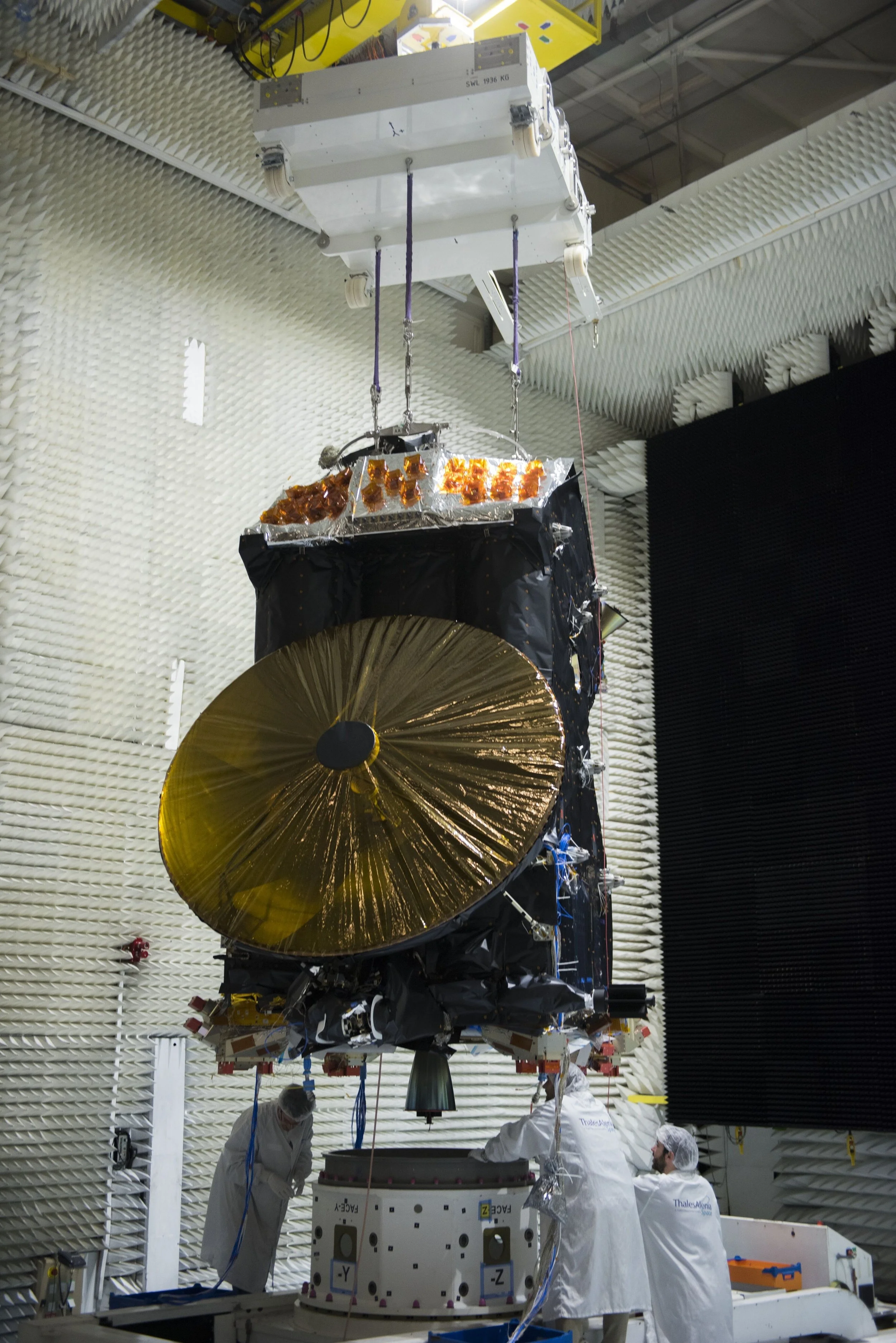
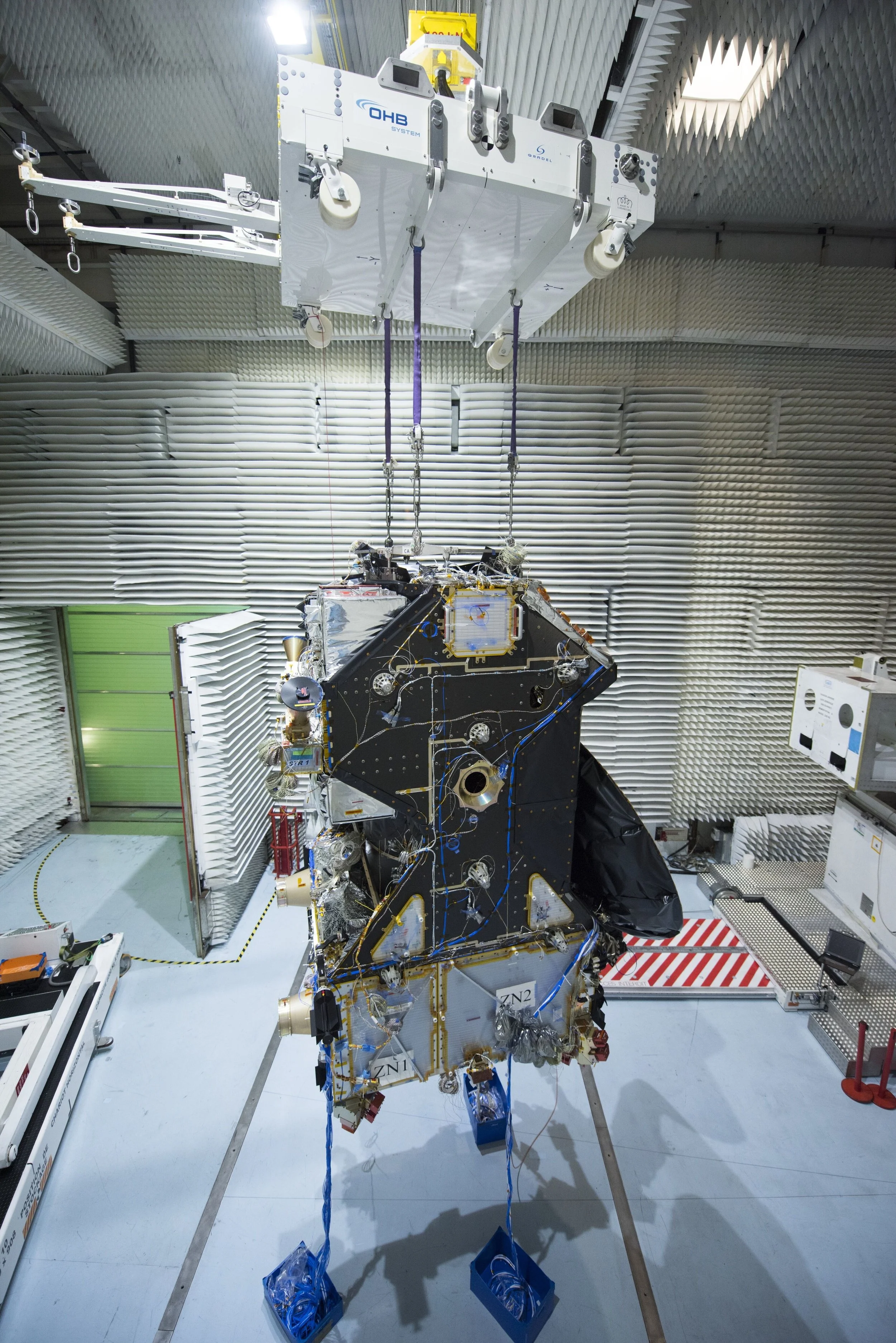
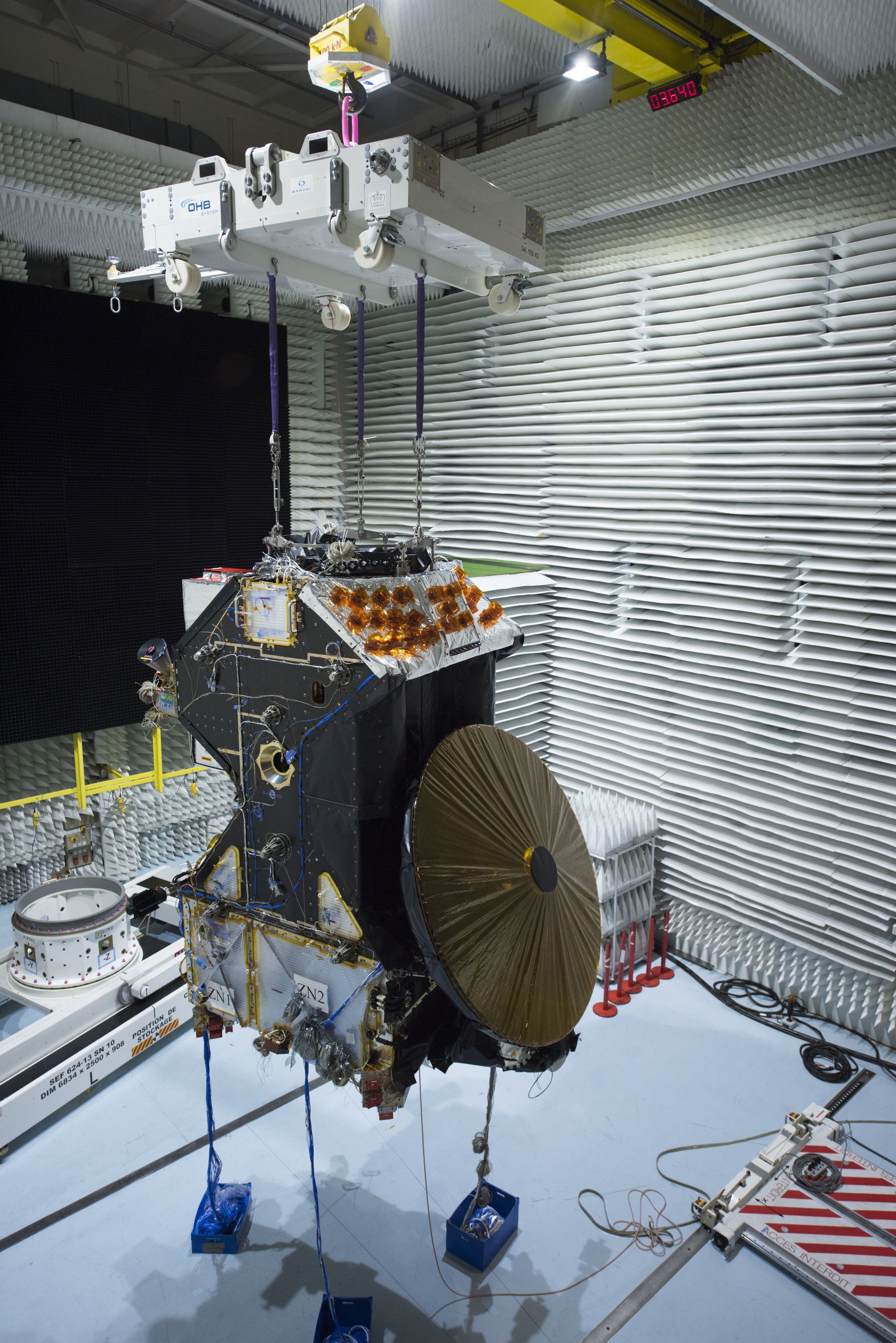
The programme comprises two missions. The first launched in March 2016 and consists of the Trace Gas Orbiter (TGO) and Schiaparelli, an entry, descent and landing demonstrator module. The second comprises a rover and surface science platform; as of March 2022, the launch window is under review.
TGO’s main objectives are to search for evidence of methane and other trace atmospheric gases that could be signatures of active biological or geological processes. Schiaparelli tested key technologies in preparation for ESA's contribution to subsequent missions to Mars.
The Rosalind Franklin rover will carry a drill and a suite of instruments dedicated to exobiology and geochemistry research. The 2016 TGO will act as a relay for the surface mission.
CREDIT
Airbus
Explore in depth some of the European Space Mission we have support with our technology and innovative Equipment.